
The EU Packaging Nightmare No One Saw Coming
Crushing Side Hustles and Vintage Sellers with Red Tape

If this is an example of how the “new international order will be built out of the EU”, as Mark Carney stated recently, that new international order doesn’t look very promising.
A chance conversation with someone I know, on the crushing weight of EU bureaucracy, has inspired this post. This person, whose name and shop details have been changed to protect their identity, sells vintage items on eBay. Last week, a surprise and abrupt email from eBay landed in her mailbox. The message said that she must comply with Germany’s newly enforced packaging rules or lose access to its market. From 12 August 2026, the EU’s Packaging and Packaging Waste Regulation (PPWR) will spread similar obligations across all member states. For micro-sellers shipping from the UK, or even between EU members, this means potential registration in every EU country.
Welcome to net-zero ideology in action creating a “green” bureaucracy: mountains of red tape disguised as planetary salvation. It’s really beginning to look like the EU apparatus doesn’t like micro and small businesses. This story should alarm anyone who values free enterprise, side hustles, or simply buying and selling without endless fees and charges. It’s also another example of how the EU is strangling its own economy. If this is an example of how the “new international order will be built out of the EU”, as Mark Carney stated recently, that new international order doesn’t look very promising.
Meet my friend “Sarah”. She runs a little eBay shop selling used model trains, die-cast cars, Styrofoam airplanes, antique trinket boxes, and delicate vintage figures. These fragile, unique, and sometimes oddly shaped collectibles are in demand in the UK and around the world. She wraps each item in foam or bubble wrap depending on the item, uses strong fibre tape to assemble the cardboard boxes, then cushions the items within the embrace of protective fillers (peanuts) made from eco-friendly biodegradable corn starch. About 10 percent of her sales are to EU countries, and about half of those to Germany: maybe 50 to 70 boxes a year. Her profits are small, often just £8-15 per item.
But then she received that email and the compliance hammer landed. Comply with the German packing system and its LUCID registration or face significant fines. Plus, from 12 August 2026, the EU’s PPWR will spread the pain to every EU member. The law promotes “minimalist eco-packaging”. Minimalist eco-packaging? Try telling a buyer that their crushed model train car, a unique vintage piece from the 1970s, is a small sacrifice for being sustainable. From a seller’s perspective, one bad review, one return, and your eBay reputation and margins evaporate. For second-hand goods that have “spared” the planet from new manufacturing, proper protection is common sense and a necessity not a “waste”.
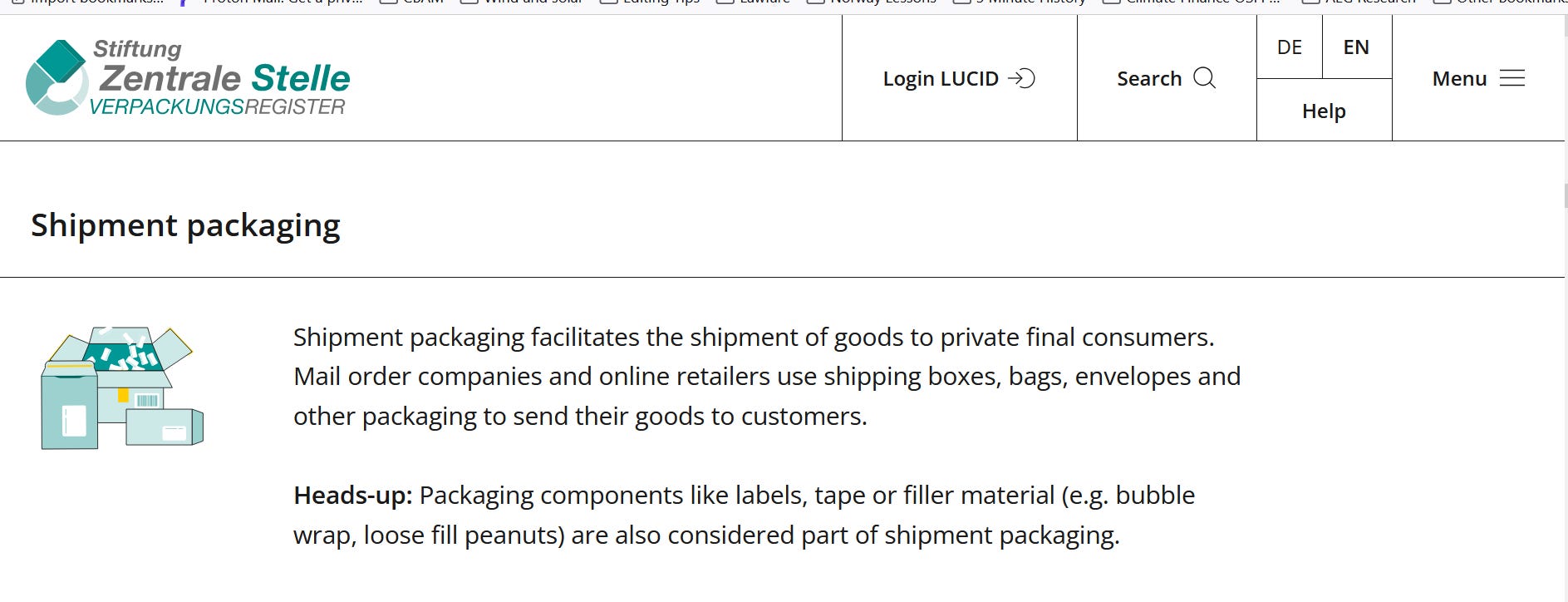
The rules are absurdity on steroids. Of course, Germany is the first country to enforce the packaging register. The register includes everything: shipping boxes or envelopes, bubble wrap, foam wrap, type of fillers (paper, plastic, or eco-peanuts), even tape and labels! For Germany, the seller must register all those shipping items on the German system called LUCID, which is anything but clear and the epitome of over-complicated red tape.
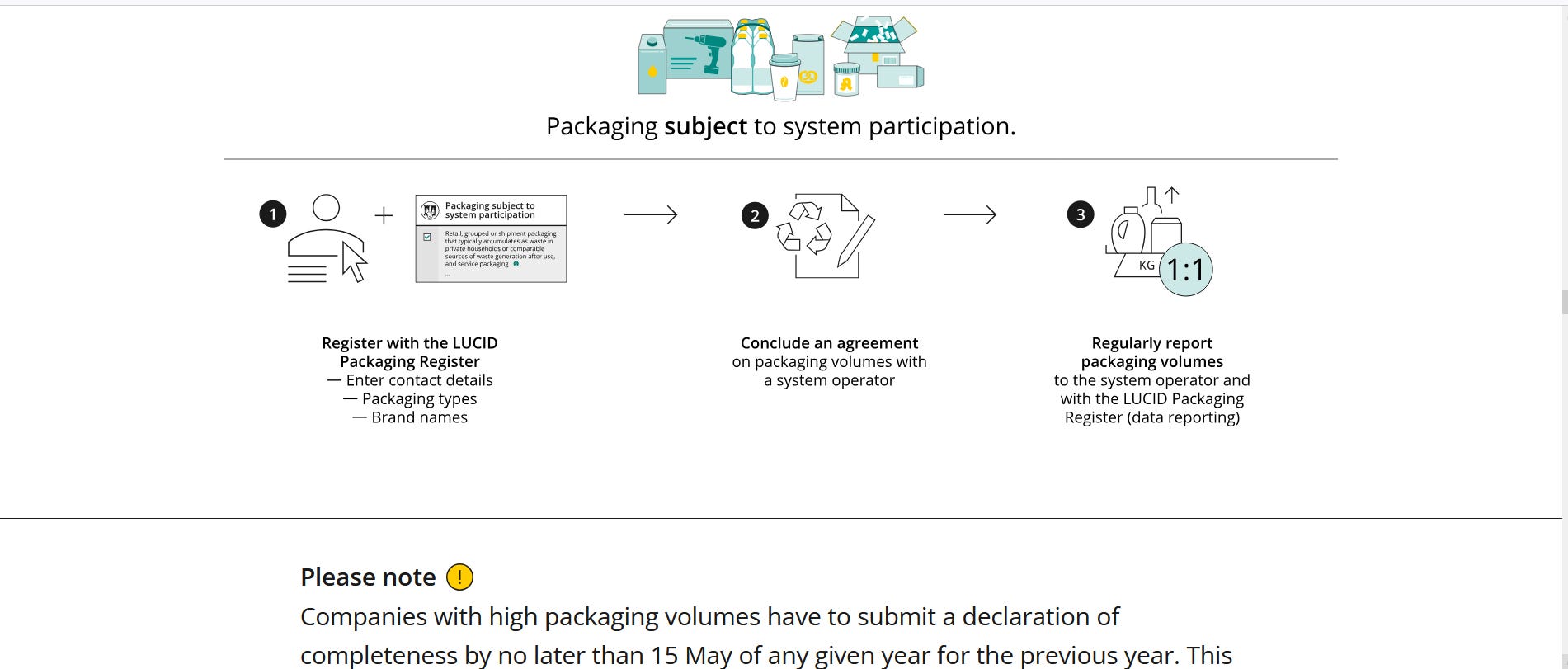
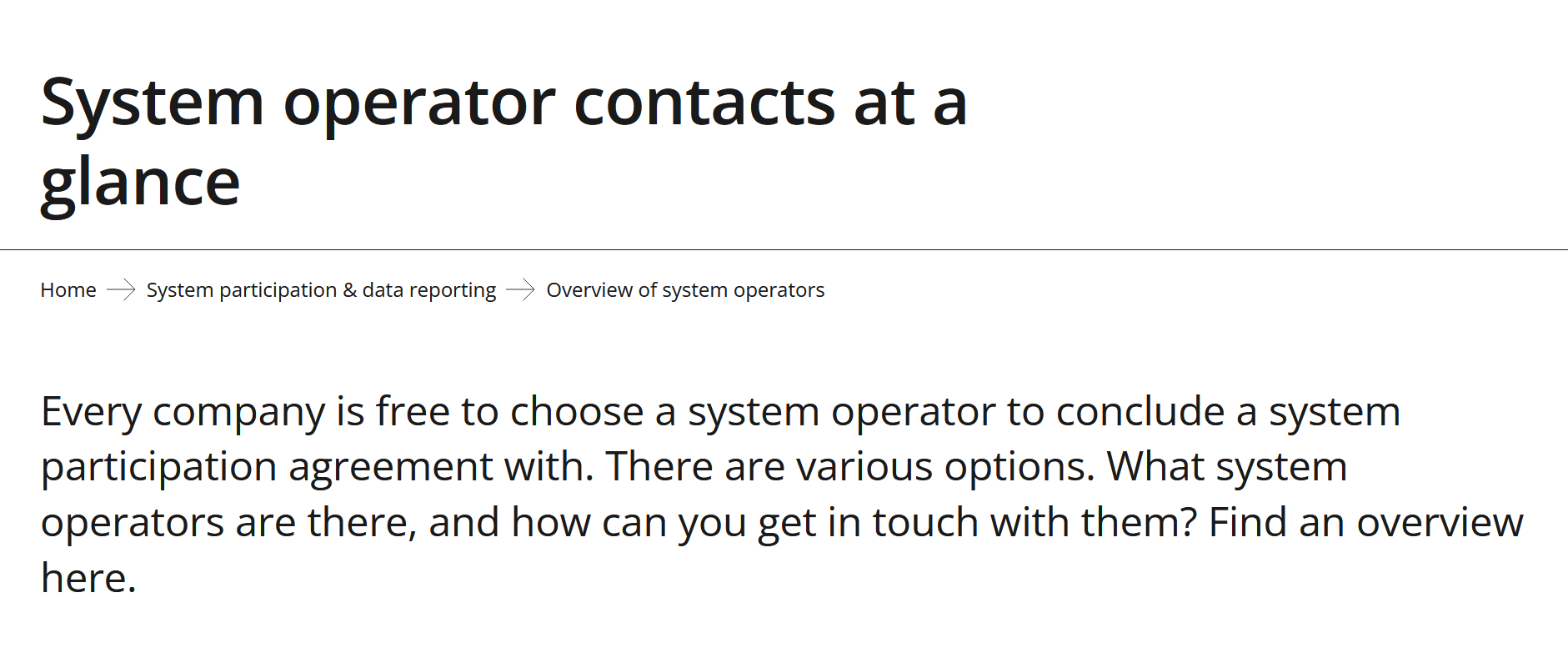
Then after registering, one must choose the bizarrely named “system operator” – that’s the euphemism for middleman. There are ten to choose from, each with a price point based on reported volumes but which tend to have a “flat rate” that includes their service fees. There are no exemptions for micro businesses.
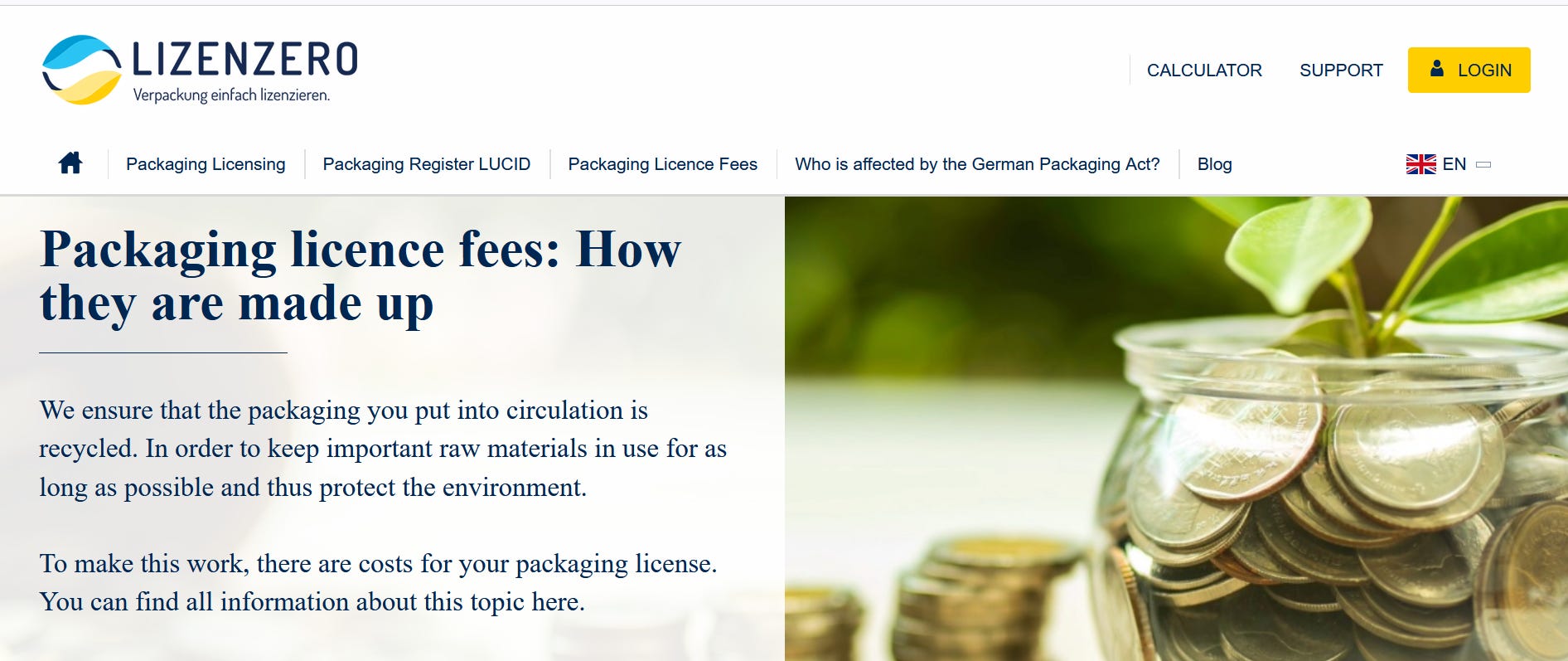
For Sarah’s shipping volumes to Germany, remember about 50 small or medium parcels, the cost according to one “system operator”, is 39 Euros—that’s about 80 Eurocents per package just in the fees. This doesn’t count Sarah’s time in doing the registering, the compliance, the tracking. Given that she has a small profit margin, 80 cents per package adds up.
One German “system operator” proudly claims that they “organise the collection, sorting and recycling of your packaging – to give it the chance of a new life.” Wow, that sounds great, but clearly not true.
When Sarah sells a vintage model to a buyer in Berlin, for example, she doesn’t provide the buyer’s address to the “system operator”. They don’t knock on the door for collection. It all goes into the general household sorting system or maybe the box is reused by the buyer. Who knows. The point is that the claim is marketing fluff of something that is really quite impossible at the individual level. Sarah pays the fee to the “system operator” and they pass the money around the system because the fees are divvied up to the various local councils where there are recycling centres. Where the cardboard Sarah sent actually ends up, nobody knows, but she has to pay for it to be recycled.
In August, once the PPWR becomes mandatory for every EU member, Sarah won’t register once for the EU, she’ll have to register in every single member state she ships to! She’ll have to track the sizes, materials, fillers, and destinations (good luck with eBay’s global shipping programme where the final address isn’t always clear upfront).
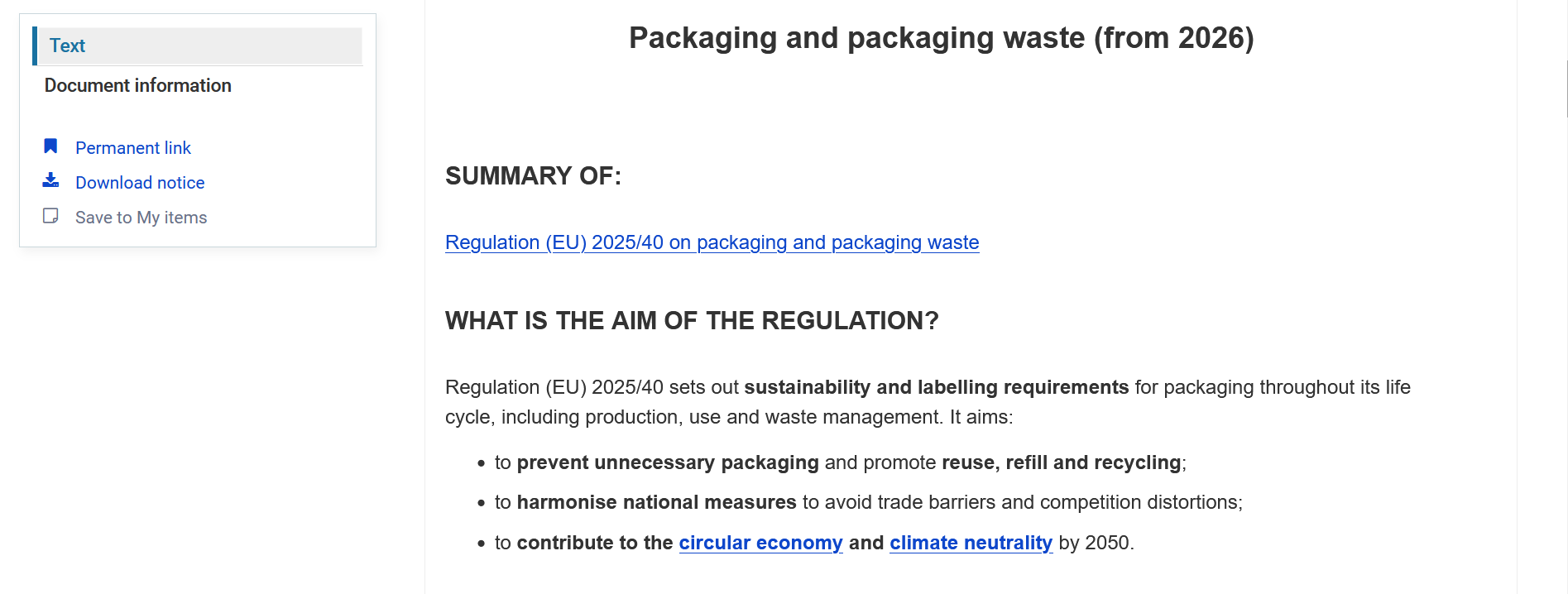
Then, in 2028, comes mandatory harmonised labelling on every box telling consumers what’s recyclable and where to toss it. That’s another cost not just for the labels themselves (Why is the EU adding another piece of packaging?), but also for the recycling of them. Either consultants will feast on confused micro-sellers trying to navigate this across 27 countries, or the sellers will just stop selling across borders.
The EU claims it is working hard to reduce burdens and increase competitiveness, especially for SMEs, but this absurd policy is doing the opposite. Micro sellers will retreat to selling only domestically, if they can, to avoid the multi-country nightmare. Choice shrinks and barriers are erected inside the EU. The irony is that the EU has been going on about reusing items and promoting the second-hand market, yet this draconian set of rules penalizes and punishes small second-hand sellers. Reducing waste has genuine merit. Over-packaging in some industries is real. But applying one-size-fits-all rules to a micro-seller protecting a £30 vintage toy is regulatory theatre. Meanwhile, large online retailers, probably the real target for this legislation, build fulfilment centres, absorb the bureaucracy and costs, and dominate.
This is a case of the net-zero obsession run amok with “circular economy” slogans that punish second-hand sellers! Leaders preach that net-zero creates “green jobs”. Sure, an army of consultants, compliance officers, and fee collecting middlemen who prefer to be called “system operators” leeching from tiny online shops before handing money to governments. What sort of economy does that build?
Welcome to net-zero ideology in action creating a “green” bureaucracy: mountains of red tape disguised as planetary salvation.
Unfortunately, this is a pattern rather than incompetence. Every new EU rule, and there’s thousands, piles another layer on micro and small, medium enterprises, while multinationals, which are often the target of these rules, pass on the costs and adapt. Niche traders, eBay sellers, and side-hustles trying to eke out an extra Euro or Pound, are collateral damage in the march to net-zero by 2050. Perhaps it’s just an unintended consequence, but it almost seems intentional.
The EU talks big on competitiveness but delivers decline instead. Free markets, or what’s left of them, are undermined and entrepreneurs are suppressed. All of this is ostensibly in the name of “saving the planet” from the dreaded already recycled cardboard protecting vintage second-hand toys (yes, I’m being sarcastic).
Once again, an EU net-zero policy that claims to promote the circular economy actually harms the circular economy. Trading second-hand goods is green. Protecting those goods so they last, is green. Forcing paperwork, pushing risky packing minimalism, and mandating multi-country bureaucracy on individuals trying to sell second-hand items, that’s not green; it’s unjust, absurd, and economically suicidal. The EU’s packaging crusade perfectly illustrates how “saving the planet” rhetoric justifies burying small dreams under red tape. Net-zero isn’t saving us; it’s strangling the very small enterprises that make economies vibrant. At what point will people stand up and say, “Enough”?
Disturbing info, but very well done. Unfortunately, I don’t have much faith in people pushing back or mildly revolting to absurd policies like this. The road to apathy is far easier than the road to protecting one’s rights. If the COVID scamdemic taught some of us anything it was the sheeple are generally compliant, especially if they receive a stimulus check. The super minority of EBay sellers could all raise hell and it would not be enough for the apathetic and uninformed/misinformed masses to care. And without large numbers of people being upset the absurd overreaching regulations will continue imho. FN stupidity is gaining strength in western countries at warp speed.
The green scam is a wolf in sheep’s clothing. Pretending to ‘save the planet’, whilst instead profiteering from eroding the free market economy. Marxism in action yet again.